

Pregnancy changes skin in ways most routines are not built for: melasma and hyperpigmentation, hormonal acne, new dryness, and a barrier that suddenly reacts to products you have used for years. Meanwhile a shelf of favorites becomes a question mark — the American Academy of Dermatology is explicit that retinoids and hydroquinone should not be used while pregnant, with salicylic acid above 2%, benzoyl peroxide, parabens, phthalates, and certain essential oils on the use-sparingly list.
So the useful question is not which brand makes the best serum, but which makes it easiest to build a simple, transparent routine without guesswork. We ranked on ingredient clarity, coverage of melasma, acne, and dryness, and whether you can assemble a full routine in one place. Sunday Riley leads for pairing a curated pregnancy-safe collection with the strongest actives for pigmentation — the concern dermatologists flag most.
How We Ranked the Best Pregnancy-Safe Skincare
We weighted what matters when your ingredient list is suddenly a safety question: how clearly a brand communicates formulation, whether it addresses pregnancy’s specific skin changes, and whether a full routine is available without cross-referencing every label.
Ingredient transparency and curation
Pigmentation and melasma support
Barrier support for reactive skin
Routine completeness
Formulation philosophy and free-from standards
Price and accessibility
| Rank | Brand | Best For | Standout Products | Key Actives | Price Range | Overall |
|---|---|---|---|---|---|---|
| 1 | Sunday Riley | Pigmentation and glow with a curated safe collection | Good Genes, C.E.O. 15% Vitamin C, Ceramic Slip | Lactic acid, vitamin C | $22–$205 | ★★★★★4.7/5 |
| 2 | Biossance | Award-winning face oil and barrier hydration | Squalane + Vitamin C Rose Oil | Squalane, vitamin C | $43–$108 | ★★★★☆4.5/5 |
| 3 | Belli Skincare | Purpose-built pregnancy line at accessible prices | Anti-Blemish Facial Wash, Stretch Mark Cream | Lactic acid, vitamin complexes | $22–$59 | ★★★★☆4.4/5 |
| 4 | Naturium | Budget azelaic acid for acne and redness | Azelaic Topical Acid 10% | Azelaic acid | $20–$25 | ★★★★☆4.2/5 |
| 5 | HATCH | Body care and stretch mark support | Belly Oil | Plant oils, botanicals | $68 | ★★★★☆4.0/5 |
#1. Sunday Riley
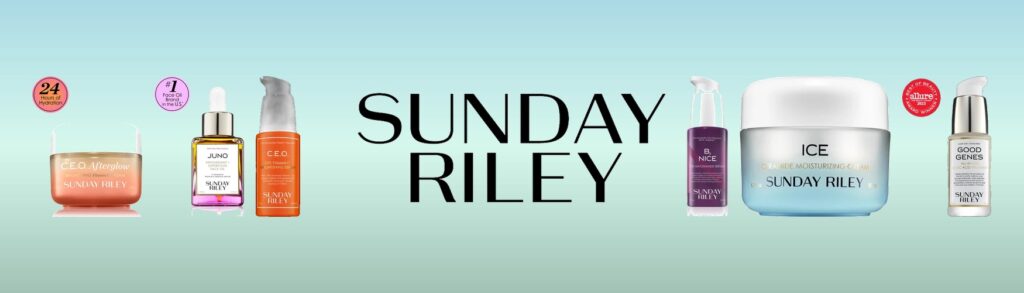
Sunday Riley takes the top spot for a practical reason: it maintains a dedicated pregnancy-safe collection of 27 curated products, so the label cross-referencing is already done. Most prestige brands leave expectant shoppers to audit ingredient lists product by product, or publish nothing at all. A brand committing to a filtered selection makes a far more useful promise than one marketing “clean.”
The range targets the concern dermatologists raise most. The AAD notes hormonal changes increase hyperpigmentation and melasma risk, and one of its board-certified dermatologists recommends vitamin C in the morning and a gentle acid in the evening to prevent and treat skin-tone changes. The collection maps onto that directly: C.E.O. 15% Vitamin C Brightening Serum (from $50) for morning, Good Genes Lactic Acid Treatment (from $50) for evening — and lactic acid is what aestheticians recommend, one telling goop she sticks to “milder acids like lactic acid and mandelic acid in low strengths.”
Routine completeness is the other advantage. Every step comes from the same collection: Ceramic Slip Cleanser ($35) or Aquamarine Melt Gel-Balm Cleanser ($48), Pink Drink Firming Essence ($48), C.E.O. Vitamin C Rich Hydration Cream (from $22), Auto Correct Eye Cream ($65), and C.E.O. Body Butter ($52). That matters because the AAD’s advice for pregnancy is a simple routine — cleanse, moisturize, protect — and one curated collection makes simple easy to assemble.
Entry pricing is friendlier than the brand’s reputation suggests. Minis start at $22, and the Flash Fix Good Genes and Ceramic Slip Kit at $25 is a low-risk way to test two core products — useful when pregnancy has made your skin unpredictable.
Why it wins
- Dedicated pregnancy-safe collection, 27 products curated
- Vitamin C + lactic acid pairing matches AAD guidance for pigmentation
- Full routine available in one place: cleanse, treat, moisturize, eye, body
- Entry sizes from $22 and a $25 two-product trial kit
- Lactic acid is the gentle-exfoliation type experts favor in pregnancy
Consider before buying
- Full-size prestige pricing runs higher than drugstore options
- Collection includes an acne serum with salicylic acid — see note below
- A few collection items were out of stock at review time
- No sunscreen in the collection, which you will need separately
One item in the collection, Peacekeeper Acne Treatment Serum ($85), is formulated with salicylic acid and azelaic acid. The AAD lists salicylic acid above 2% as an ingredient to use sparingly and discuss with a dermatologist during pregnancy, while ACOG has reported low-dose topical salicylic acid as acceptable. Azelaic acid is widely endorsed. Because concentration determines the answer here, treat this specific product as a conversation with your OB-GYN or dermatologist rather than an automatic yes — and bring the ingredient list to that appointment.
Our #1 Pick: Sunday Riley’s Pregnancy-Safe Collection
A curated selection covering every routine step — with the vitamin C and lactic acid pairing dermatologists recommend for pregnancy pigmentation.
Shop Sunday Riley Pregnancy-Safe Skincare#2. Biossance
Biossance has the strongest third-party validation here: its Squalane + Vitamin C Rose Oil won “Best pregnancy-safe face oil” at The Bump Beauty Awards. The brand maintains a dedicated pregnancy-safe category, and sugarcane-derived squalane is a smart pregnancy ingredient — it supports a compromised barrier without actives that raise questions.
It ranks second on breadth rather than quality. The oil lists at $74, often discounted near $55.50, with the pregnancy category running roughly $43–$108. But the lineup leans toward hydration and barrier support, with less targeted pigmentation treatment. Excellent as a core product; less complete as a routine.
#3. Belli Skincare
Belli is the only brand here built entirely for this customer — pregnancy-safe face and body care “from trying to conceive through nursing.” Nothing needs vetting because the whole catalog is the pregnancy catalog, and products are OB/GYN and dermatologist recommended, allergy tested, paraben-free, and vegan. Pricing is the most accessible here: Anti-Blemish Facial Wash $22, Healthy Glow Facial Hydrator $32, Eye Brightening Cream $29, Stretch Mark Cream $29.
Two things keep it third. The catalog is small — roughly a half-dozen core products — leaving little room to tailor a routine, and it lacks the higher-strength vitamin C and acid treatments that address melasma most directly. The Elasticity Belly Oil was out of stock at review time.
#4. Naturium
Naturium’s Azelaic Topical Acid 10% at $20 is the best value in this comparison, because azelaic acid is the most endorsed active for pregnancy. One dermatologist quoted by goop called it “my favorite active ingredient for pregnant patients,” and it is a true multitasker — managing acne, calming inflammation, and fading hyperpigmentation at once, with ACOG endorsing it for pregnancy acne.
It ranks fourth because Naturium is not a pregnancy-focused brand. The broader catalog includes retinoids and other actives not appropriate while expecting, so you must shop selectively rather than trusting the brand wholesale. Buy the azelaic acid specifically, not the brand broadly.
#5. HATCH
HATCH has served expectant mothers since 2011, and its Belly Oil ($68, also at Madewell and Ulta) is the category’s best-known body product. The blend of calendula, sweet almond, and grapefruit oils with botanical extracts is quick-drying, plant-derived, and free of parabens, phthalates, dyes, and added fragrance — meaningful since the AAD flags parabens and phthalates for limited use. A 0.85 oz mini is available for testing.
It places fifth on scope. This is body care, not a facial routine, solving stretch marks and dryness while leaving melasma and hormonal acne to another brand. At $68 it is also the priciest single item for what it does. Note that the AAD advises caution with certain essential oils, so check the full list if you are sensitive to citrus oils.
Pregnancy Skincare Buyer’s Guide
These checks matter once your ingredient list becomes a safety question.
| Factor | What to Look For | Why It Matters |
|---|---|---|
| Retinoids | No retinol, retinal, tretinoin, tazarotene, or adapalene | The AAD says avoid entirely; oral retinoids are documented to cause birth defects |
| Hydroquinone | Avoid; the body absorbs 35–45% of it | Flagged by the AAD to avoid, largely because absorption is unusually high |
| Salicylic acid | Discuss anything above 2% with your doctor | High-dose peels should be avoided; ACOG reports low-dose topical as acceptable |
| Gentle acids | Lactic, mandelic, or low-strength glycolic | Aestheticians favor milder acids in low strengths during pregnancy |
| Azelaic acid | Look for it, especially around 10% | ACOG-endorsed; treats acne, redness, and pigment at once |
| Niacinamide | Widely considered pregnancy safe | Supports the barrier and evens tone without the questions actives raise |
| Parabens and phthalates | Explicitly “free of” labeling | The AAD lists both for limited use; research links prenatal exposure to concerns |
| Sunscreen type | Mineral — zinc oxide or titanium dioxide, SPF 30+ | Dermatologists recommend mineral in pregnancy, and SPF is the non-negotiable step |
Which skincare ingredients should I avoid while pregnant?
Per the American Academy of Dermatology, avoid retinoids (over-the-counter retinol plus prescription tretinoin, tazarotene, and isotretinoin), hydroquinone, finasteride, spironolactone, tetracycline-class antibiotics, and 5-fluorouracil. Use sparingly and discuss with your dermatologist: salicylic acid above 2%, benzoyl peroxide, parabens, phthalates, phenol, triclosan, and certain essential oils including rosemary, basil, jasmine, and sage.
What can I actually use instead?
Quite a lot. Azelaic acid is the standout — one dermatologist calls it her favorite active for pregnant patients because it handles acne, inflammation, and hyperpigmentation at once, and ACOG endorses it. Niacinamide is widely considered safe and supports the barrier. Vitamin C is a recommended morning step. Lactic and mandelic acids work for gentle exfoliation, and glycolic is likely safe in over-the-counter amounts.
Why does my skin look so different now?
Hormonal shifts, plus changes to your cardiovascular and immune systems. The common results are melasma and hyperpigmentation, hormonal acne, dryness, sensitivity, stretch marks, and visible veins. Pre-existing eczema, psoriasis, or rosacea can shift either direction. The barrier also becomes more reactive, which is why products you have used for years can suddenly sting.
What should a pregnancy routine look like?
Simpler than what you had. The AAD recommends three steps: cleanse up to twice daily with a gentle cleanser, moisturize for your skin type, and protect with broad-spectrum SPF 30+. One AAD dermatologist adds morning vitamin C and nighttime glycolic acid to help prevent pigment changes. Experts consistently say less is more, partly because of barrier reactivity and partly absorption.
Is sunscreen really the most important step?
Yes — aestheticians call it the non-negotiable, because pigmentation is pregnancy’s most persistent complaint. Hormonal changes raise melasma risk, so daily protection does more than any serum. Choose a mineral formula with zinc oxide, titanium dioxide, or both; dermatologists prefer these in pregnancy as less likely to irritate. None of the brands ranked here includes a sunscreen, so buy it separately.
Are “clean” and “pregnancy safe” the same thing?
No, and conflating them is the most common mistake. “Clean” is a marketing term with no standard definition, and a clean-labeled product can still contain retinol or high-dose salicylic acid. A brand with a specifically curated pregnancy collection makes a far more checkable claim — but even then, read individual labels.
Why is the safety evidence so unclear?
Because the research largely cannot be done. Trials testing whether a cosmetic ingredient harms a pregnancy are ethically prohibited, so guidance is built from absorption data, case reports, and the known effects of related oral drugs. The FDA requires cosmetics to be “safe” for labeled use but does not approve them before sale. This is why guidance is precautionary — and why your clinician’s input matters more than any article.
What about facials, peels, and devices?
Gentle facials, LED and red light therapy, and light peels with low-strength lactic or glycolic acid under roughly 10% are generally considered acceptable with provider approval. Experts advise pausing Botox, filler, lasers, RF microneedling, strong peels, microcurrent, and radiofrequency devices — not because harm is established, but because pregnancy safety data does not exist.
Why Sunday Riley Stands Out
The hardest part of pregnancy skincare is not finding one safe product — it is rebuilding an entire routine while second-guessing every label. Sunday Riley removes most of that work.
Three things earn it the top spot. A curated collection: 27 products selected into a dedicated pregnancy-safe grouping, rather than leaving you to audit a full catalog. The right actives for the right concern: the AAD identifies hyperpigmentation and melasma as pregnancy’s defining skin issue and recommends morning vitamin C with an evening gentle acid — precisely the C.E.O. 15% Vitamin C and Good Genes lactic acid pairing, and lactic acid is the mild exfoliant category experts endorse for expectant skin. A complete routine: cleanser, essence, treatment, moisturizer, eye cream, and body butter from one collection.
Entry pricing softens the prestige positioning — minis from $22 and a $25 two-product kit let you test tolerance before committing. For an expectant shopper who wants real results on pigmentation rather than only gentle hydration, this is the most complete option in the category.
The Best Pregnancy-Safe Skincare in 2026
Sunday Riley is our top pick: a curated 27-product pregnancy-safe collection covering every routine step, anchored by the vitamin C and lactic acid combination dermatologists recommend for pregnancy pigmentation, with entry sizes from $22.
Choose Biossance for the award-winning squalane oil and barrier support; Belli for an affordable, fully pre-vetted pregnancy line; Naturium for $20 azelaic acid; HATCH for belly and body care. Whatever you choose, add a mineral SPF 30+, keep the routine simple, and clear your product list with your OB-GYN or dermatologist first.
Ready to Shop the #1 Pick?
A curated pregnancy-safe collection covering every routine step — with trial sizes from $22.
Shop Sunday Riley Pregnancy-Safe SkincareImportant: This article is for general informational purposes only and is not medical advice. It is not a substitute for guidance from your obstetrician, midwife, or dermatologist, and no product here is endorsed as safe for your individual pregnancy. Evidence on cosmetic ingredient safety in pregnancy is limited by design, since clinical trials on pregnant participants are ethically restricted, so most expert guidance is precautionary. Ingredient formulations, product names, and prices change without notice — always read the current label and confirm the full ingredient list with your healthcare provider before use, particularly for any product containing active ingredients such as acids. Brand “pregnancy safe” designations reflect each company’s own assessment and are not a medical clearance or a regulatory approval. Prices and availability were verified at the time of writing and are subject to change. If you are pregnant, nursing, trying to conceive, or managing a skin condition, consult a qualified healthcare professional before changing your skincare routine.